
In My Own Words.
What I Believe About the Work.
Most of medicine is built around waiting. Waiting for symptoms. Waiting for a diagnosis. Waiting for a crisis.
I have spent thirty years on the other side of that line, reading the biology before it becomes disease and helping people change it. I call the work Decode to Recode®.
Decode what the biology is telling you. Recode the trajectory of chronic disease before it forces you to seek disease care. This practice principle has stayed with my patients through every name the field has gone by: anti-aging, executive health, precision medicine, longevity. The labels change. The discipline does not.
No tests for the sake of tests. No data without interpretation. No technology without a physician behind it. No influencer playing one.
Real clinicians. Real accountability. Real follow-through. More of the work lives in the writing, the media, and the conversation. Different rooms, same practice.
What's New?
Optimizing Your Metabolic Health
Dr. Chin presents a genetics-based GLP-1 health program.
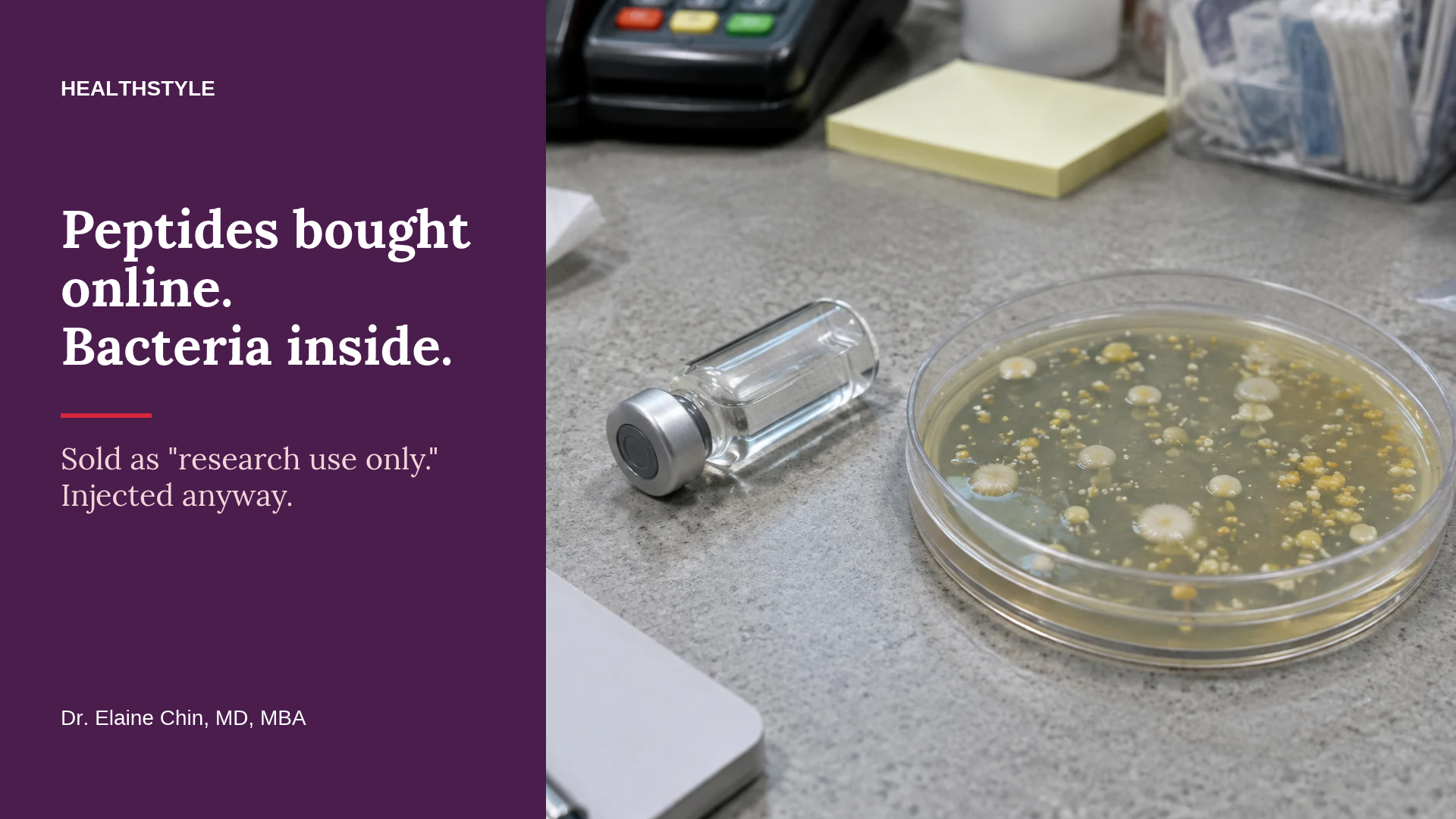
Peptides bought online. Bacteria inside.
Sold as "research use only." Injected anyway.

A Sauna Won’t Stop a Heart Attack
What I heard at the Longevity Wellness Expo, and the question every new longevity clinic should have to answer

Where Fitness Meets Biology
This week, AVANT members in Yorkville begin working with the clinical team at Health In A Box. AVANT is the first premium Canadian fitness club to offer members a preventive health

“Picture of Health” Rotman Takeaways
Last night’s Picture of Health event confirmed something Professor Zayna Khayat of Rotman put precisely: Canada is running 2026 healthcare on 1984 infrastructure. That slide

The Climb Is Never One Clean Arc
I almost failed English. Not because my English was bad. But when I went back to Hong Kong for a year of school as a child, I had a Canadian accent. Not a Chinese British accent.

Why Silence Is Not Longevity Medicine
The recent Epstein disclosures force a difficult but necessary reckoning. Not only about crimes committed, but about professional responsibility
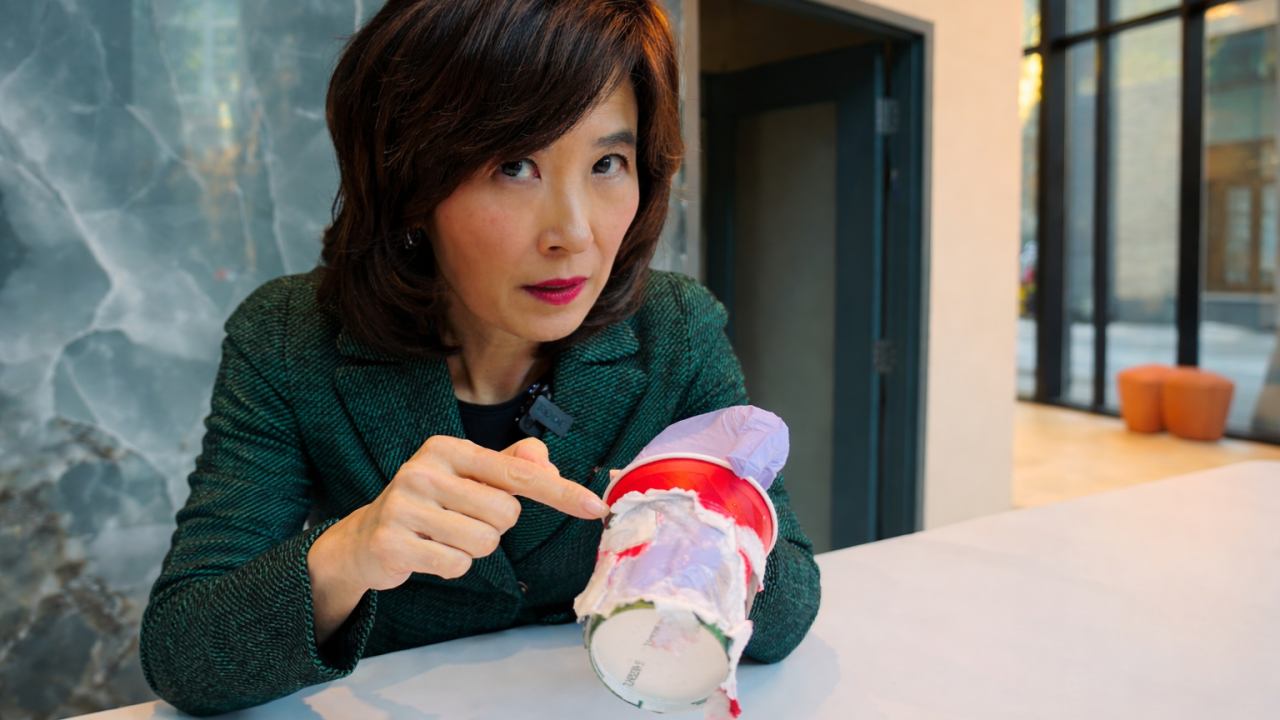
How Does a Doctor Get a Million Views Talking About Coffee Cups?
This past week taught me a leadership lesson I’d forgotten.

Who We Should Trust With Our Longevity Care
Longevity shouldn’t be exclusive. Everyone deserves to live long and well. In 2026, we stop talking about it and start delivering it.

Why I’m Returning to Women’s Health and Why It Matters Now
When I began my medical career more than 30 years ago, I was helping women navigate perimenopause

Where the Work Lives.
BOOKS
The Writing.
As a pioneer in precision medicine, I write to make advanced science usable. My books show readers how to protect their healthspan and put the science to work in everyday life. The next one, on metabolic health, is coming.
Follow on Instagram
Hot flashes, night sweats, and the scale keeps climbing? You may not have to choose between HRT and a GLP-1.
A new real-world study of about 3,900 women aged 45 and over, presented at The Menopause Society`s annual meeting in October, compared semaglutide alone with semaglutide plus hormone therapy.
After a year, the women on both lost more weight: about 11% compared with 9.5%.
Two things worth knowing:
• The extra benefit showed up with semaglutide only. With tirzepatide, adding hormone therapy made no difference.
• Semaglutide has now gone generic in Canada, so the option that showed the benefit may also be the more affordable one.
My caution: this is early data. It`s a link, not proof. Before you start, ask your doctor whether both are right for you, and get your blood work and scans done first so you know you`re safe.
Follow for more on what`s new in menopause and metabolic health.
#menopause #perimenopause #HRT #GLP1 #semaglutide #womenshealth
Hot flashes and night sweats, and you can`t take hormones? The new menopause guidelines have two answers for you. I disagree with both.
In October 2026, the American College of Obstetricians and Gynecologists released its first update on managing menopause symptoms since 2014 (Clinical Practice Guideline No. 13).
First, antidepressants remain a strongly recommended option for hot flashes in women who can`t or don`t want to take hormones. In my practice, an antidepressant is not my first move for a woman whose only complaint is menopause.
Second, the guideline says the evidence doesn`t support phytoestrogens, the plant compounds found in soy. That blanket statement takes an option off the table. A 2012 review of 17 placebo-controlled trials found soy isoflavones reduced how often and how hard hot flashes hit. The right dose and a quality product matter.
You have more options than you`ve been told. Talk them through with a physician who knows you.
Follow for more on midlife health.
#menopause #hotflashes #HRT #womenshealth
Before 1922, a diabetes diagnosis was a death sentence. Doctors could only buy time with starvation diets.
In the early hours of October 31, 1920, a struggling young doctor in London, Ontario, woke up with an idea and wrote it down. His name was Frederick Banting. He took it to the University of Toronto, where he and a student, Charles Best, ran the experiments in Professor John Macleod’s lab. Biochemist James Collip purified the extract so it was safe to inject.
In January 1922, 14-year-old Leonard Thompson lay dying at Toronto General Hospital. He became the first person to receive insulin. His chart reads one word: Improved. He lived another 13 years.
The 1923 Nobel Prize went to only two of the four: Banting and Macleod. Banting was furious that Best was left out and split his prize money with him. Macleod shared his with Collip.
Today is Banting’s birthday, which is why November 14 is World Diabetes Day. Beside Banting House in London, Ontario, the Flame of Hope was lit in 1989. It will stay lit until there is a cure.
I’m proud to have trained at the University of Toronto and Toronto General Hospital, where it all began. A century later, diabetes is no longer a death sentence, but too many people find out late. Your A1c shows how much sugar has coated your red blood cells over about three months. At 6.5% or higher, it’s diabetes. Caught early, it’s treatable.
If you or someone you love would like support with diabetes screening, our team is here to help. Reach us through the link in bio.
Photos: Library and Archives Canada and Wikimedia Commons, public domain. Before and after: J.-P. Assal, World Health Organization, via U.S. National Library of Medicine. Leonard Thompson’s chart, 1922: Thomas Fisher Rare Book Library, University of Toronto. Flame of Hope: Chris Woodrich, CC BY-SA 4.0, cropped. Flame lighting, 1989: Helmholtz19, CC BY-SA 3.0. Hospital ranking: Newsweek, World’s Best Hospitals 2026. Apple image created with AI in Canva; all historical photos are real archival images.
#WorldDiabetesDay #Insulin #A1c #UofT
The FDA just added a new warning to every GLP-1: a rare risk of sudden vision loss in one eye.
Here’s my honest take. I think we’re focused on the wrong side effect.
What doesn’t keep me up at night: the eye. In the FDA’s review of 126 trials, the risk went from about 4 per 100,000 people a year to 6 per 100,000. That’s tiny. It shows up mostly in people with diabetes, where the arteries are already narrowed, blood pressure drops as the weight comes off, and you forget to drink. If you ever notice a sudden change in vision in one eye, go to emergency.
What does keep me up at night: losing muscle and bone. Neither is on the label. Up to 40% of the weight you lose can be lean mass, and one fall can mean a broken hip. The good news is that more protein and lifting weights go a long way.
The side effects you’re far more likely to feel? Nausea, diarrhea, constipation, gallbladder trouble.
All of it is manageable. But it needs to be managed, by a doctor who sees you in person.
Share this with someone you love who’s on a GLP-1, or thinking about starting one.
Let us know if we can help support your GLP1 journey.
#GLP1 #MetabolicHealth #PreventiveMedicine #MuscleMatters #LongevityMedicine DrElaineChin
To be clear, I’m not an anti-peptide physician. I prescribe peptides, my patients fill them at a licensed pharmacy, and I never leave them unsupported on their peptide journey.
This is a warning for Canadians and Americans: know where your peptides come from.
Peptides have a real place in medicine when a physician prescribes them and a licensed pharmacy fills them. What worries me is where these vials come from.
Health Canada issued a public advisory on November 6, 2026 after lab testing found bacteria in unauthorized injectable peptides sold online. More than 11,400 vials were seized.
In October, a CBS News investigation had a vial sold as retatrutide tested in a lab. There was no retatrutide in it. There was bacteria.
Still want to lose weight? Do it the safe way. Start with a physician who knows you, who checks your bloodwork and even your genetics to see if a GLP-1 is right for you. Physician-led, genetics-guided.
Ready to start safely? Send me a message, or reach our physician-led team at @bespokewellnessclub or @healthinaboxofficial.
The products in the Health Canada advisory included tirzepatide, retatrutide, tesamorelin, MOTS-c, NAD+ and hCG.
What to do:
• Check the label. Authorized drugs in Canada carry a DIN, a Drug Identification Number.
• “For research use only” means it was never made for people.
• Already injecting? Fever, chills, or redness, swelling or pain at the injection site needs medical care right away.
• Have some at home? Don’t use it. Take it to your local pharmacist for safe disposal.
The products were sold in Canada through truenorthbiolabs.ca and bcaxiompeptide.com. Both sites have been shut down.
Sources: Health Canada public advisory, recalls-rappels.canada.ca · CBS News, October 21, 2026
What if one blood draw could look for more than 50 types of cancer, including some that have no routine screening at all?
Pancreas. Ovary. Liver. Stomach. Esophagus. Most of these have no standard screening test, which is why they are so often found late.
Cancerguard reads two signals in your blood: DNA methylation patterns shed by tumours, and proteins that cancers release. In the study, it picked up about 68% of these deadliest cancers, and 97 out of 100 people without cancer received a clear result.
How I use it with my patients:
A positive signal is not a diagnosis. It is the start of a careful workup we do together.
A clear result does not replace your mammogram, colonoscopy, Pap test or lung screening. Cancerguard adds to them.
Finding risk before it becomes disease is the medicine I have practised for thirty years. Cancerguard is now available at Bespoke Wellness Group.
To talk it through with me. Visit www.bespokewellness.group
#EarlyDetection #CancerScreening #PrecisionMedicine #LongevityMedicine Toronto
On a GLP-1, or thinking about one? These are the blood tests that matter, and why you should track them.
Cholesterol. Your triglycerides, your blood fats, often start higher and come down as you lose weight.
Your LDL, your bad cholesterol, usually improves too. And as you exercise, your HDL, your good cholesterol, may go up.
Blood sugar. We want to see your A1C come down. Your fasting insulin tells us whether you’re still progressing or you’ve plateaued, and whether your dose needs to change.
Inflammation. Your CRP often comes down as the weight comes off.
Nutrients. When you eat less, B12 and iron can slip. Magnesium can improve as you lose weight.
Safety. A baseline for your pancreas, kidneys, liver and thyroid.
Your genes set the starting point. Your blood work guides the dose.
DECODE your genetics. RECODE your health.
Start a conversation with us. Link in bio.
#GLP1 #BloodWork #MetabolicHealth #PrecisionMedicine #WeightManagement
Same medication. Same dose. Very different results. Part of the reason may be in your genes.
GLP-1 medications are one of the most important advances in metabolic medicine in a generation. But they don’t work the same way for everyone.
The GLP-1 receptor isn’t only in your gut. It’s in your brain and in many tissues throughout your body. For some people, that means nausea and vomiting. Some respond strongly. Others, much less.
A large study published this year in Nature, of more than 27,000 people, linked small, common gene variations to how much weight people may lose, and how likely they may be to feel nauseated or vomit.
Today, a simple cheek swab done at home can look at those genes. It’s not a verdict. It’s a starting point that helps you and your physician set expectations and plan your dose.
That’s why we’re launching DECODE to RECODE: decode your genetics, recode your metabolic health.
Follow for Part 3: the blood tests that matter.
If this is of interest to you, let’s have a conversation. Link in bio.
#GLP1 #Genetics #Pharmacogenetics #MetabolicHealth #PrecisionMedicine
Your GLP-1, guided by your genes. Getting a GLP-1 isn’t the hard part anymore. Knowing how to use it is.
What dose is right for me?
How do I avoid the side effects?
When the time comes, how do I come off it?
Those are the right questions. And the answers begin with your genetics and your biomarkers. That’s why today, we’re launching DECODE to RECODE.
A cheek swab looks at genes linked to how you may respond to these medications, and how well your gut may tolerate them. Your blood work shows your blood sugar, cholesterol, hormones and key nutrients. A physician and a naturopathic doctor read it all together with you.
Your dose follows your biology, not a calendar. Up, hold, down, and off.
DECODE your genetics. RECODE your health.
Follow for Part 2: what your genes can tell you.
What’s your biggest question about GLP1s? Tell me in comments.
Start a conversation with us. Link in bio.
#GLP1 #MetabolicHealth PrecisionMedicine WeightManagement Genetics
A room full of cancer doctors gave a standing ovation in Madrid this weekend. Here’s why.
At the European Society for Medical Oncology (ESMO) Congress, a phase 3 trial showed a shot designed from each patient’s own tumor cut the risk of melanoma coming back by 42%.
What’s true, what’s still missing, and what it means for you and your loved ones is all in the reel.
The part you control today is finding cancer early. For melanoma, that starts with a skin check. More on Cancerguard, our multi-cancer blood test, in coming videos.
Data: INTerpath-001, presented at ESMO 2026 and accepted for publication in the New England Journal of Medicine. Video: ESMO 2026.
#melanoma #cancerresearch #immunotherapy #earlydetection #precisionmedicine DrChinBreaksItDown
Can GLP-1 drugs like Ozempic and Wegovy lower your risk of cancer? As a physician, I’ll admit the latest research surprised me.
Large observational studies suggest people taking GLP-1 medications have a lower risk of developing certain obesity related cancers. In people who already have cancer, the research also points to a lower risk of it spreading.
Most of the people in these studies had diabetes or obesity, and observational data can’t prove cause and effect yet. Still, the biology behind it is compelling. Three reasons why GLP-1s may lower cancer risk:
1. Less fuel. GLP-1 drugs lower insulin and blood sugar, two things tumours use to grow.
2. A calmer environment. Excess body fat isn’t just stored energy. It releases inflammatory signals and signals that build new blood vessels, the supply lines tumours depend on. Less fat means fewer of those signals.
3. A stronger defence. Obesity weakens your natural killer cells, the immune cells that hunt down stray cancer cells before they settle somewhere new. GLP-1 therapy appears to help restore them.
So is GLP-1 a cancer drug? No. What this research shows is how much metabolic health shapes the ground cancer grows in. Lowering inflammation, improving insulin sensitivity, and supporting a healthy weight all change that environment.
This content is for education only and is not medical advice. Speak with your doctor before starting or changing any medication.
References:
1. JAMA Oncology, 2025. GLP-1 receptor agonists and cancer risk in adults with obesity.
2. Orland et al., ASCO Annual Meeting 2026, Abstract 3143.
3. Iyengar, Hudis, Dannenberg. Annual Review of Medicine, 2015.
4. Quail & Dannenberg. Nature Reviews Endocrinology, 2019.
5. De Barra et al. Obesity, 2023.
Ultra-processed food isn’t just a waistline problem. A new McMaster study of nearly 8,800 Canadians links it to a 40% higher risk of silent strokes.
What you eat in your 30s, 40s and 50s is already shaping your brain at 70.
Study: de Souza RJ, et al. Ultraprocessed Food Intake and Adiposity, Vascular Brain Injury, and Cognition in Middle-Aged Adults. JAMA Network Open. 2026;9(10):e2639118.
Most ovarian cancer may not start in the ovary at all.
For decades, we looked in the wrong place. Research now shows that high grade serous carcinoma, the most common and most aggressive type of ovarian cancer, often begins in the fallopian tubes. This helps explain why there is still no reliable screening test and why most cases are found late.
Canada helped change that. Prevention research from British Columbia on opportunistic salpingectomy, which removes the fallopian tubes but keeps the ovaries, is changing gynecologic surgery around the world.
👉 If you are having abdominal surgery and no longer plan to have children, ask your surgeon whether your fallopian tubes can be removed during the same surgery.
📖 Read more about the study here: https://jamanetwork.com/journals/jamanetworkopen/fullarticle/2844597
Wishing Pope Leo a speedy recovery following his lung cancer diagnosis.
Lung cancer remains the leading cause of cancer-related deaths worldwide, and you don’t have to be a smoker to develop it.
Early detection matters. Know your risks, recognize the symptoms, and understand your screening options.
#LungCancerAwareness #EarlyDetection #LungHealth #PreventiveMedicine
Where Fitness Meets Biology
Strong is visible. Healthy isn’t. We can measure both.
Your bench press gets tracked every week. 50 pounds, 100 pounds, a new PR, a spotter cheering you on.
Now ask yourself: who’s spotting your cortisol? 🤔
Dr. Elaine Chin, founder of Health In A Box, believes the output of your training should be just as measurable as the weight on the bar. Is your cholesterol moving in the right direction? Is your insulin in good control? Are your testosterone and estrogen in the zone?
As she puts it, the goal isn’t getting to normal. It’s getting to optimal.
Why test your blood if you already work out? Because training changes your body in ways a mirror and a scale can’t show. Health In A Box programs at AVANT read your metabolic, hormonal, and nutrient markers alongside your fitness targets, then translate the results into what they mean for how you feel, recover, and perform.
Avant’s training just got smarter. This is where fitness meets biology.
👉 Head to healthinabox.com to learn more about Health In A Box. Link in bio.
Can a GLP-1 protect your heart even if the scale never moves?
The evidence is starting to say yes.
Researchers at the Technical University of Munich and Harvard Medical School analyzed U.S. health insurance and medical records and found an 18% drop in the risk of heart attack and stroke among patients on GLP-1 therapy.
Then in April, a University of Virginia study looked at more than 13,000 patients and found a lower risk of atrial fibrillation whether people lost weight, stayed the same, or gained weight.
That last detail is the one worth sitting with. If the heart benefit shows up in patients who never lost a pound, the protection is not coming from weight loss alone.
This is why I describe GLP-1 as a metabolic health modulator rather than a weight loss drug. It is a hormone peptide, and it appears to work on inflammation and cardiovascular risk through pathways we are still mapping.
The category is moving almost weekly. What we know about GLP-1 twelve months from now will not be what we knew twelve months ago.
Follow along. I will keep translating the research as it lands.
It’s always a special day when @rickhansenofficial stops by the @bespokewellnessclub
Forty years ago he rolled 40,000 kilometres at the age of 27, through 34 countries, and the world has been building ramps ever since.
Most people don’t connect the two. The curb cut you pushed a stroller through this morning. The automatic door you walked through without thinking. That’s a legacy you use every single day without knowing whose name is on it.
And Rick isn’t done. Forty years in, the conversation has moved from access to regeneration, and he’s still the one leaning forward asking what’s next.
The 40th Anniversary of the Man In Motion World Tour is being celebrated this fall, with premieres in Toronto on September 11 and Vancouver on October 3, 2026. Follow @rickhansenfdn for everything happening. 🎬
Longevity medicine has become the fastest growing buzzword in wellness, and right now anyone with a weekend course and a website can call themselves a longevity specialist. Meanwhile people are spending thousands on panels they never needed, collecting PDFs they cannot read, and moving from clinic to clinic hoping the next one finally explains what any of it means.
Thirty years in personalized medicine teaches you something a certificate cannot: knowing which tests matter is harder than knowing how to order them. Real longevity care is precise, preventative, and built around a team of practitioners who translate your data into how you actually live.
So before you book, ask harder questions. Ask how long they have practiced preventative medicine. Ask who else is on their team. Ask what they are looking for and why.
Be an educated health consumer. Your biology deserves it.
As of May 2026, PCOS has an official new name: PMOS, polyendocrine metabolic ovarian syndrome. Renamed through a global consensus and backed by more than 56 clinical and patient organizations.
Why? Because “polycystic” was never accurate. We used to think of this as a cystic condition. We now know it is far more than that. The new name puts the real drivers up front: multiple hormone systems and metabolism. Insulin resistance, diabetes risk, weight gain, inflammation, fertility challenges.
I have patients with PMOS I have worked hard with for years. When we introduce GLP-1 medications, insulin comes down, diabetes risk comes down, and the weight gain improves.
So was this renamed just to sell more GLP-1 drugs? No. I have seen a lot of strange things go on in medicine. This is not one of them.
The FDA has approved daraxonrasib for metastatic pancreatic cancer, and the news landed close to home this week. A client told me his best friend from public school had just been diagnosed at stage four, and for the first time I had a real answer for him.
The drug works on RAS, a gene area we test for in tumour cells. When it mutates it stays switched on and tells the tumour to keep growing. Daraxonrasib is the killer switch for that gene. It is also a pill, which for pancreatic cancer patients is remarkable on its own.
In the trial that led to approval, patients lived a median of 13.2 months compared with 6.6 months on chemotherapy. That is roughly double.
It is approved in the United States for patients who have already had a round of systemic therapy. Canada is not there yet.
I started this work over twenty years ago trying to understand what genetics could do for the average patient. Two decades later we can test a tumour, find the mutation, and turn the switch off. That is the whole promise of genomic medicine showing up in a prescription pad.
If someone you love has been diagnosed, ask their oncologist whether RAS mutation testing has been done and what it showed.
Educational information only. Treatment decisions belong with your oncology team.