
The Climb Is Never One Clean Arc
I almost failed English.
Not because my English was bad. But when I went back to Hong Kong for a year of school as a child, I had a Canadian accent. Not a Chinese British accent. So I got docked a grade.
Then I came back to Canada. And for the first term of every single school year, I would get a B or an A minus in English. Same work. Lower grade. Because I had not yet proven myself to a new teacher.
By the third term I could write anything and still get an A.
“I was not doing anything differently. The bias was just baked in. It took time to overcome it.”
For years I carried that with me. I believed I was not a good writer. That English was my weakness. That my voice on the page would never be enough.
It took a dare from my friend Kenneth Whyte to prove me wrong. He challenged me to write a book. I did. And somewhere in that process I stopped writing to prove something and started writing to say something. That is when my voice finally became my own.
I’m not complaining. It’s the jungle. Every environment has rules. Some of them are written. Most of them are not. And the sooner you understand which jungle you are in and who wrote the rules, the sooner you can figure out how to climb.
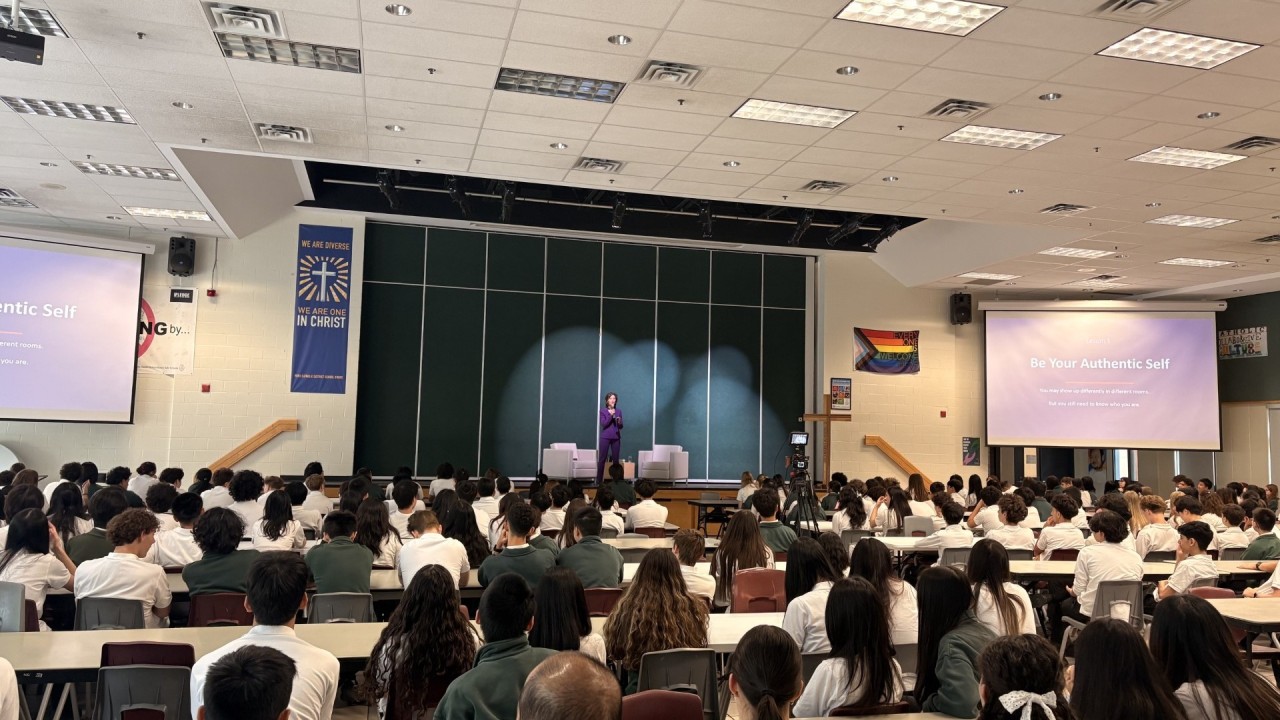
The jungle is made up of rooms. And in every room I have ever walked into, whether in medicine, business, boardrooms, or stages, I have had to decide who I was before the room decided for me.
That was lesson one. Be your authentic self. Know who you are. Because if you do not, the jungle will define you.
Life is not one clean mountain.
I showed the students a photograph of a mountain ridge. Not a single peak. A series of them. Ridges and valleys, all the way across.
That is the shape of a real life.
You climb. You summit. You descend. Most people hit the descent and think they’re done. It’s not. They are standing at the bottom of the next climb.
“The question is not whether the descent happens. It will. The question is whether you have built enough stamina: mentally, physically, emotionally, to start again.”
I have been practicing medicine for over 30 years. The leaders I watch struggle in their forties and fifties are almost never the ones who lacked ambition. They are the ones who treated their body as something to push through rather than something to manage. They borrowed against their future for so long that when the next ridge appeared, they had nothing left to climb with.
Health is not a reward for success. It is the infrastructure that makes sustained performance possible.
That was lesson two. Be strong for the climb. Because life does not get easier. You just have to get stronger
The rules will change.
AI is rewriting entire industries. Careers that made sense five years ago are being restructured. The framework you built your confidence on may no longer apply.
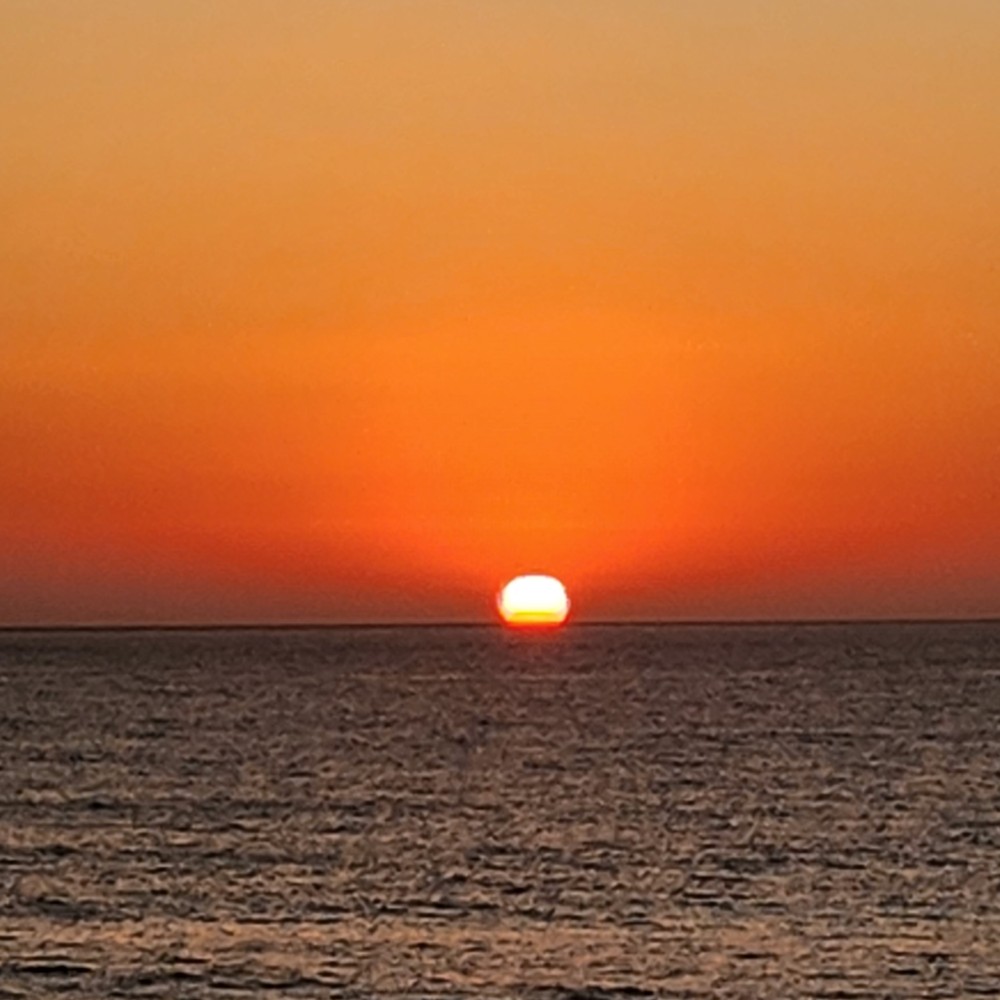
A sunset is not a failure of the sun. It is a transition.
“Sherry Turkle, a sociologist at MIT, has spent decades studying what happens when we replace real human relationships with frictionless digital substitutes. Her conclusion: friction is the nature of the human condition. It makes us who we are.”
The students who will thrive in an AI world are not the ones who memorize the most. They are the ones who know how to think, how to relate, how to earn trust, and how to adapt when the problem is new.
The same is true for every leader sitting in a boardroom right now wondering what the next five years look like.
That was lesson three. Be a whole person.
Do more than follow. Do more than memorize. Do more than optimize for output.Develop your creativity. Build real relationships. Practice judgment. Learn to communicate. Lead. Adapt.
The world does not need more machines that perform. It needs humans who can think, connect, and show up fully, especially when it is hard.
I closed with a video.
NASA astronaut Reid Wiseman filmed it on an iPhone during the Artemis II lunar flyby. Earth dropping behind the Moon’s horizon.
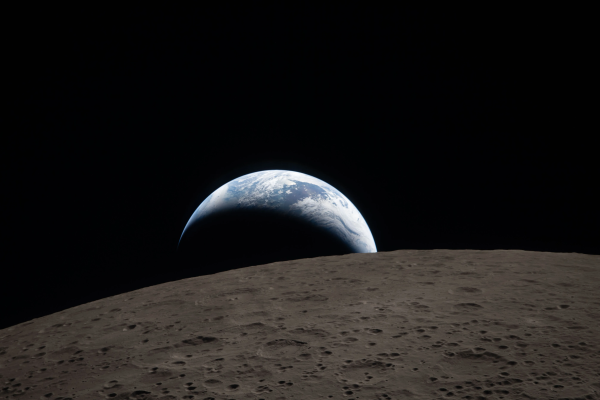
Nothing about the universe changed. But he moved and his vantage point changed. And suddenly what was background became the most extraordinary thing he had ever seen.
That is the whole message.
The biases are baked in. The climb is hard. The rules will change again. None of that is going away.
But once in a while you need to move far enough to see it all differently. The universe does not change. Just your perspective.
A personal thank you to Mathushan Ambida and Vice Princiapl Harvey Wu and for the introduction and the invite. St. Theresa of Lisieux Catholic High School ranks first out of 746 secondary schools across Ontario in the most recent Fraser Institute Provincial Report Card. I was honoured to speak there and left three of my books with their library.
Leave a Reply